

Studded Tires in Canada: What the Rules Actually Say, Province by Province
Last modified on October 16th, 2026 in Technical center
At a glance
- Studded tires are legal in most Canadian provinces, but permitted dates, eligible vehicles, and fines differ significantly from one province to the next.
- In Quebec, studded tires are permitted from October 15 to May 1 : using them outside this window is an offence.
- In Ontario, studded tires are only permitted in Northern Ontario, and prohibited in Southern Ontario.
- Alberta has no restrictions on studded tires year-round.
- Some indoor parking facilities and private garages ban studded tires due to surface damage, worth checking before you buy.
Every fall, the same question comes up for drivers in colder parts of Canada: are studded tires legal here, and if so, when? It's a fair question, the rules vary considerably from province to province, and what's perfectly legal in one region can get you a fine in another. Here's a clear breakdown of the regulations that apply across the country, so you can make an informed decision before the season starts.
Why Studded Tires? What They Do That Regular Winter Tires Can't
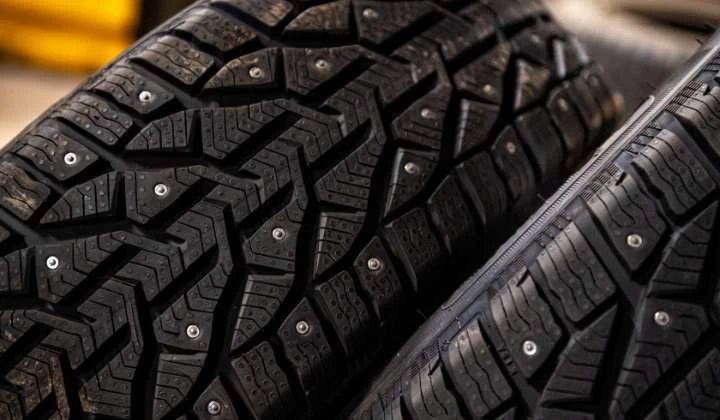
A modern 3PMSF-rated winter tire already delivers strong grip on snow and packed ice thanks to its rubber compound and tread design. Studded tires, however, retain a measurable advantage on glare ice and black ice because the metal stud physically bites into the surface rather than relying solely on the rubber compound to grip it.
For a driver who regularly travels on rural or northern roads that aren't plowed frequently, lives in a region prone to freezing rain, or regularly navigates icy hills and driveways, that extra traction can make a real difference. For primarily urban drivers on well-maintained roads, a premium studless winter tire typically offers comparable performance without the trade-offs.
Studded Tire Regulations by Province
Quebec — October 15 to May 1
In Quebec, studded tires are governed by a separate regulation from the general winter tire obligation: the Règlement sur l'utilisation d'antidérapants sur les pneus de certains véhicules routiers (RLRQ c. C-24.2, r. 44). The permitted window is October 15 to May 1, broader than the winter tire obligation period (December 1 to March 15).
This means Quebec drivers can legally install studded tires as early as mid-October, well ahead of the December 1 winter tire deadline, and must remove them by May 1 at the latest. Driving on studded tires outside this window is an offence, with fines ranging from $60 to $100 per vehicle.
Studded tires are permitted on passenger vehicles, taxis, and commercial vehicles with a loaded weight under 3,000 kg. Both tires on the same axle must be studded; if the front axle is studded, the rear must be as well. The reverse does not apply, rear-only studded tires are permitted.
Ontario — Northern Ontario Only, September 1 to May 31
Ontario has the most restrictive rules in the country when it comes to studded tires. They are only permitted in Northern Ontario, defined as the districts of Algoma, Cochrane, Kenora, Manitoulin, Nipissing, Parry Sound, Rainy River, Sudbury, Thunder Bay, and Temiskaming. The permitted period is September 1 to May 31.
In Southern Ontario, studded tires are prohibited for Ontario-registered vehicles. Vehicles registered in another province that permit studded tires may pass through Southern Ontario without penalty.
Alberta — No Restrictions
Alberta is the most permissive province when it comes to studded tires. There are no restrictions on their use, any vehicle may use them at any time of year. That said, provincial legislation does make it an offence to cause road damage through the use of studs or chains, and the province generally recommends using studded tires only when conditions warrant them.
British Columbia — October 1 to April 30
In British Columbia, studded tires are permitted on provincial highways from October 1 to April 30. The same axle rule applies as in Quebec: if studded tires are installed on the front axle, they must also be installed on the rear.
Manitoba — October 1 to April 30
Manitoba permits studded tires from October 1 to April 30 on passenger vehicles. No restrictions on vehicle weight are specified for personal use.
Saskatchewan — October 1 to May 1
Saskatchewan permits studded tires from October 1 to May 1. Given the province's exposure to severe winter conditions across its vast rural road network, studded tires are a practical choice for many drivers.
New Brunswick, Nova Scotia, PEI — No Fixed Restrictions
The Maritime provinces generally allow studded tires during the winter season without legislating strict date windows, though local municipalities may have their own guidelines. Always check with your provincial transport authority for the most current rules before installing studded tires.
Newfoundland and Labrador — Permitted
Newfoundland and Labrador permit studded tires during the winter period. Given the province's challenging winter conditions and extensive rural road network, they are a common choice among local drivers.
Quick Reference: Studded Tire Rules by Province
Note: Regulations are subject to change. Always verify current rules with your provincial transport authority before installing studded tires.
The Limits to Consider Before Installing Studded Tires
The metal stud improves traction on ice, but it also wears down road surfaces and polished concrete more quickly — which is why many indoor parking facilities and private garages ban their use on their property. We recommend checking this before purchasing if your vehicle is regularly parked in such a location.
Studded tires also produce more road noise on dry or clear pavement, and their advantage on ice doesn't always translate into a meaningful gain on deep snow or in predominantly urban, well-plowed driving, where a premium studless winter tire already delivers comparable performance without the associated drawbacks.
When to Shop for Studded Tires
Since permitted periods typically begin in early to mid-October depending on your province, drivers who prefer studded tires are better off shopping early in the season rather than waiting for the general winter tire rush. The most popular sizes tend to sell out first at most retailers as winter approaches.
The same logic applies in spring: book your changeover appointment in advance, well before the deadline, to avoid the end-of-season rush at tire shops.
Factory-Studded vs. Studdable Tires: A Key Distinction
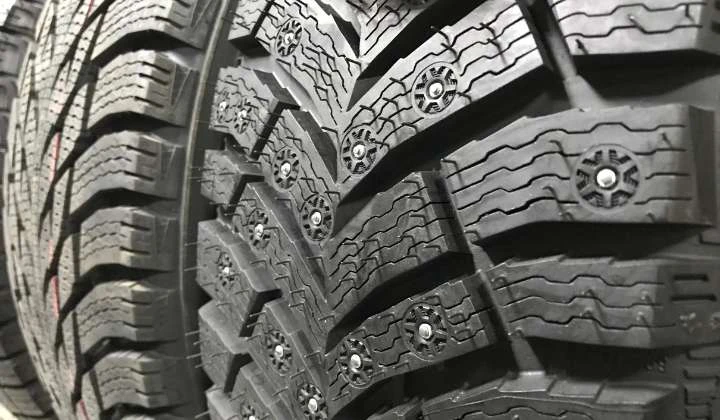
Some winter tire models are sold studdable rather than already studded from the factory: their tread is designed with pre-moulded receptacles for studs, but the actual installation is done separately by a qualified installer rather than at the point of purchase. Other models come factory-studded, ready to install. This distinction affects both the price and the time before you can drive on them, worth clarifying before you buy.
Here are some studded tire models available at Quattro Tires:
Our Take: Are Studded Tires Right for You?
Studded tires aren't the right choice for everyone, they make the most sense for drivers who frequently navigate rural or northern roads where glare ice dominates, and much less so for primarily urban driving where roads are regularly cleared and salted.
The regulations, once you sort through them by province, are straightforward: check your permitted window, confirm your vehicle qualifies, follow the axle rule, and make sure you're not walking into a parking restriction you weren't expecting. When in doubt, always verify with your provincial transport authority, as rules can change from season to season.
View Our Studded Winter Tire Selection at Quattro Tires